Precedents:
Desertification is described as “the process of fertile land transforming into desert typically as a result of deforestation, drought or improper/inappropriate agriculture.” Many believe that desertification is mainly caused by the overgrazing of livestock, or simply the presence of far too many livestock (eg. Cows, Pigs, Chickens) who overuse the resources of the land, reducing it to infertile desert land. While this is definitely a factor in the desertification of land, other factors such as excessive deforestation and lack of or misuse of rainfall are also major factors in the process as well. In addition, the interruption of the natural grazing cycle is a direct cause of desertification as well, in that removing the herds that would naturally graze land in an attempt to revitalize it has adverse effects due to the natural cycle of plant & animal life and death lacking key components.
Challenges:
The challenges to combating desertification lie in the societal issues that are directly causing it in the first place. Looking at the Gobi Desert, major factors causing it is the rapid deforestation around its borders as well as the overgrazing of the land. Deforestation is the process of forests being clear cut to sustain a society’s need for tree based products such as paper or wood. Problems arise when the forests are cleared too frequently and without being replanted quickly enough, as trees can take anywhere from 10+ years to grow back to a decent size. With the trees gone, the animals and dead plant byproducts that previously kept the land alive and vibrant now disappear and leave the region bare and exposed, allowing the desert free reign to expand into the previously forested areas. Given the size of China’s population, their need for tree-based products is gargantuan and as a result, corporations have no choice but to continue clear cutting more forests than they are replenishing, thus leading directly to the ongoing expansion of the Gobi desert into mainland China. The problems that directly arise from this are that the country is slowly being overtaken by the inhospitable desert lands, which are nearly inhospitable to most life.
Overgrazing, another cause of desertification has many parallels to deforestation, except where deforestation involves the destruction of trees, overgrazing involves the overabundance of livestock sucking the land dry of resources. Overgrazing is caused mainly by the same factors as well, since the need to feed China’s massive population requires the massive production of livestock, which all require significant resources to cultivate. The challenges that China faces from the desertification of its land is that they are slowly losing valuable fertile land to the unusable desert. This renders them less able to expand to accommodate their growing population for one matter, as well as losing the space required to grow the resources necessary to sustain its population. With the loss of its fertile land, China loses its means of producing food and other resources necessary to modern society while also ravaging and destroying the land they live on. The extreme end result of this self-destructive path is that China will lose all of its hospitable land and become unable to support life, rendering it a dead wasteland.
Possible Solutions:
The possible solutions to desertification all lie in reducing the over-reliance on the products directly causing it as well as a conscious effort to reverse the damage that has been done. China has already begun some efforts to reduce the desertification, such as the “Great Green Wall”, which entailed the planting of millions of trees along the border of the desert in an attempt to put a stop on its advances and revive the land. It has been somewhat effective in some areas, however the solution is also flawed, in that once the trees are planted they aren’t always supported afterwards leading to them dying off. They also run the risk of planting too many trees in close proximity, thus having a similar problem to overgrazing, as the abundance of trees would sap the land clean of resources like the animals have and thus lead to them all dying out just the same. A true solution will require a societal shift away from the over-reliance on the products directly causing the desertification in addition to conscious replanting and reforestation efforts. The logic behind this is that trying to revive the land as fast as it is being devastated simply is not feasible, as the demand is simply too high. Due to this, any reforestation efforts are not potent enough to deal with the threat and so for any progress to be made, the problem must be addressed at its source: the societal dependence on products causing the desertification. Through reducing the demand for meat and tree-based products, the slower reforestation efforts will be given a chance to actually have an effect on the land.
Representations:
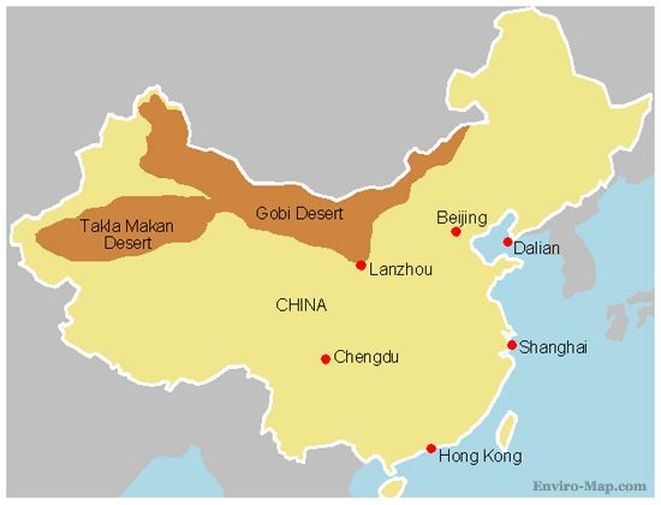
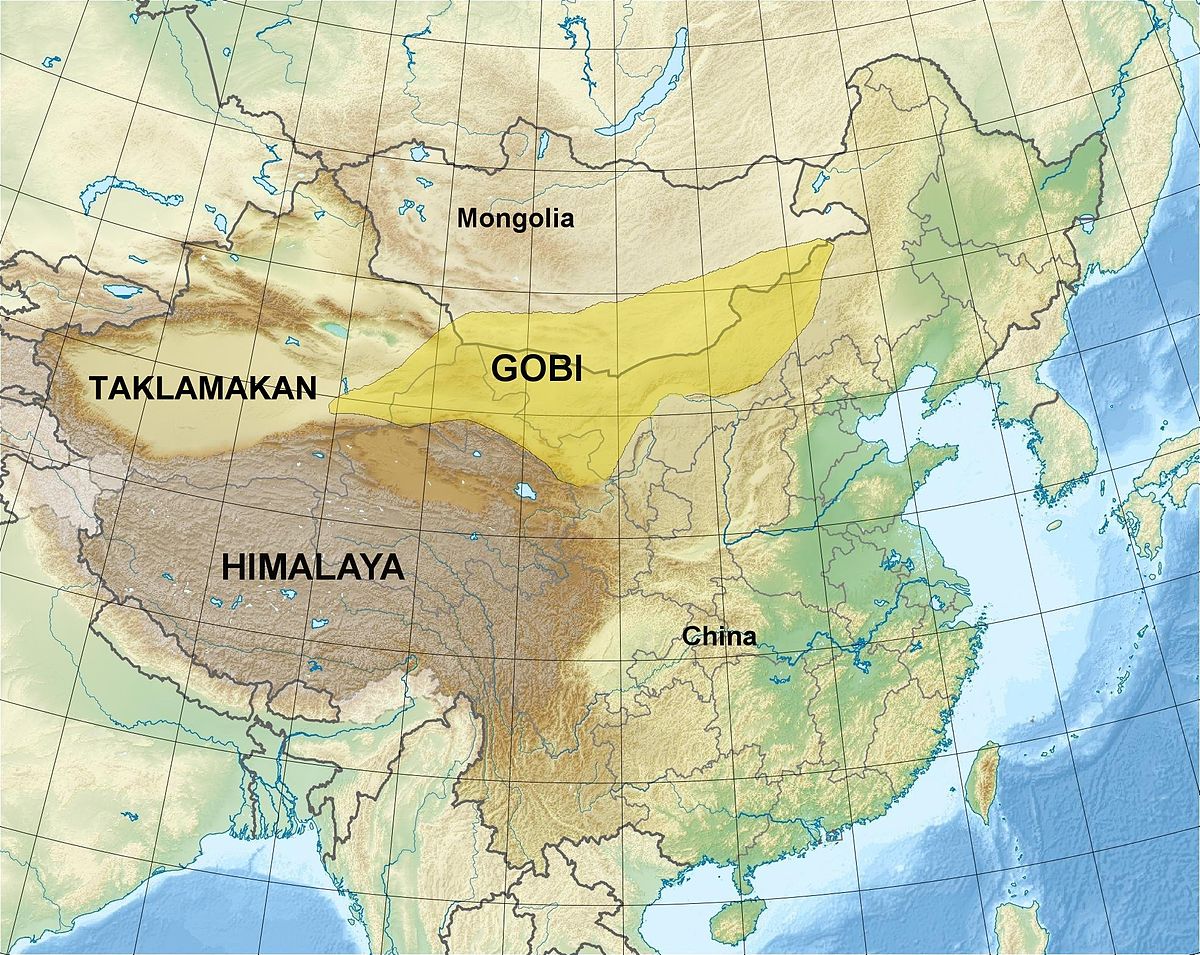
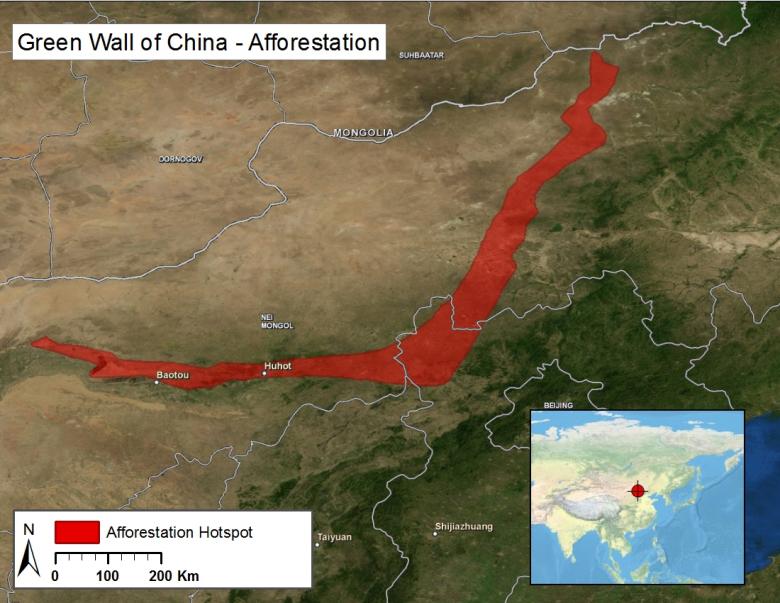
In the representations used by precedent works, many have relied on maps with highlighted areas to represent the data. Some have been simplistic flatter designs, such as the first image, while others have made use of realistic topological maps to represent their data. Both styles choose to highlight their area of focus using basic, high contrast colours to stand out against their background. There are advantages and disadvantages to both styles, the flat design allows for easier readability due to the less complex nature of the graphic and colours while also lacking some of the visual impact given by the relatability of the more realistic representations. The realistic representations use real maps or close approximations to showcase the regions while skewing as close to how they look in reality as possible. Compared to the flat design, this makes them harder to parse due to the visual noise, but also give them more impact, as they show an accurate representation of our world as opposed to the abstract flat design.


